2025 Patient Success Stories
Read our stories below . . .
-
![]()
Canada goose 25-2229
-
![]()
Northern saw-whet owl 25-2303
-
![]()
Desert cottontail 25-2400
-
![]()
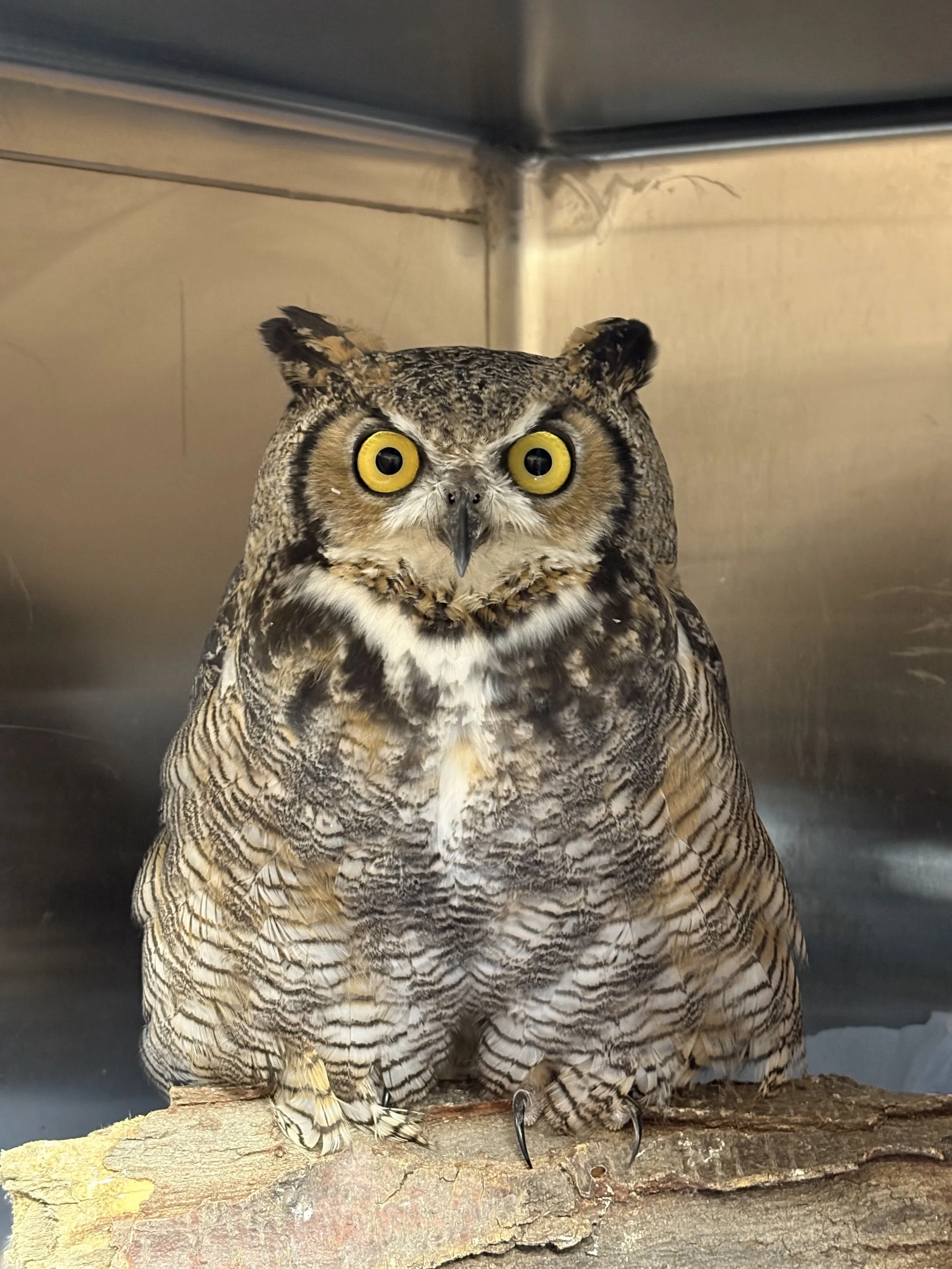
Great-horned owl
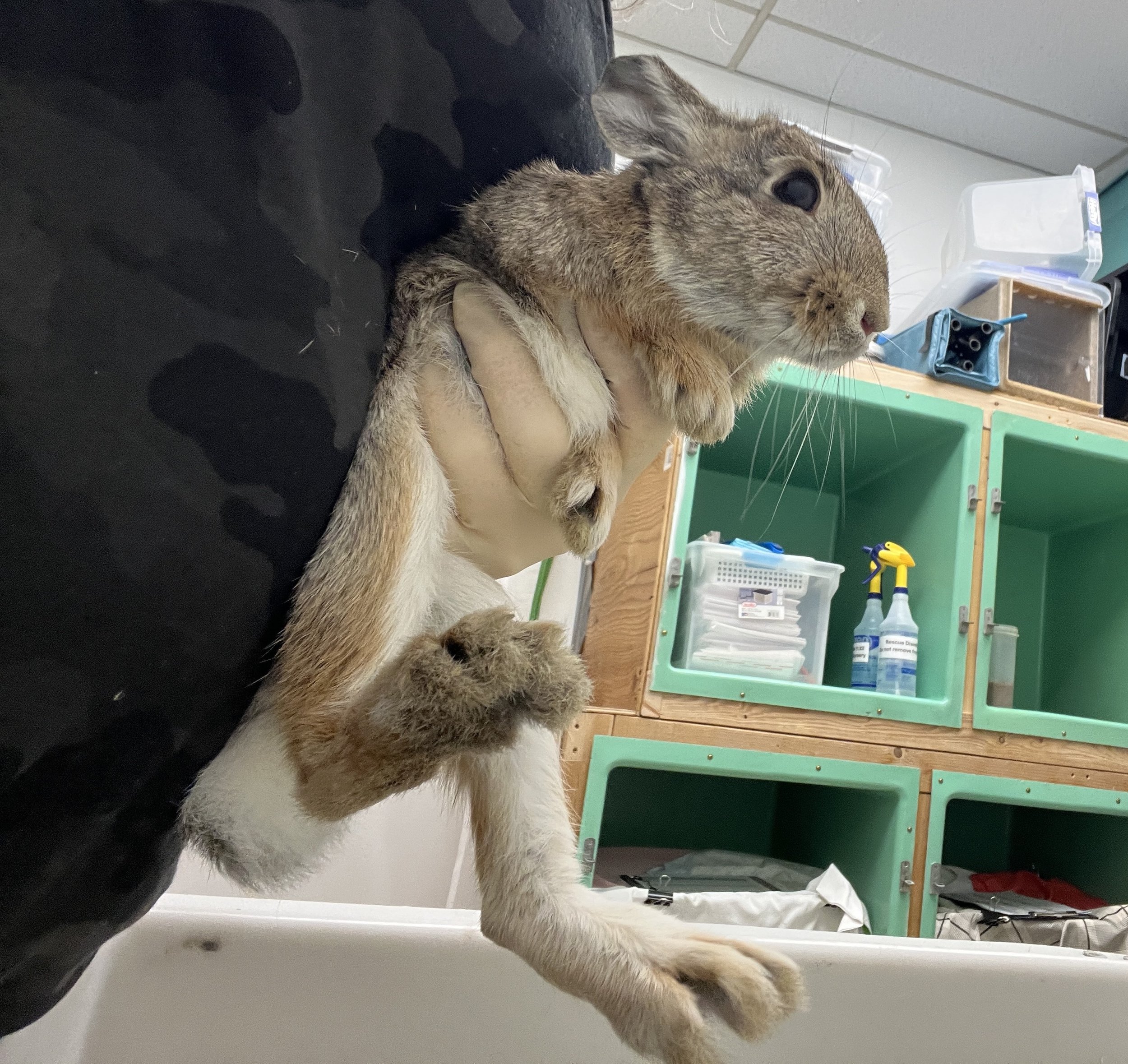
Desert cottontail gets second chance after being hit by a car
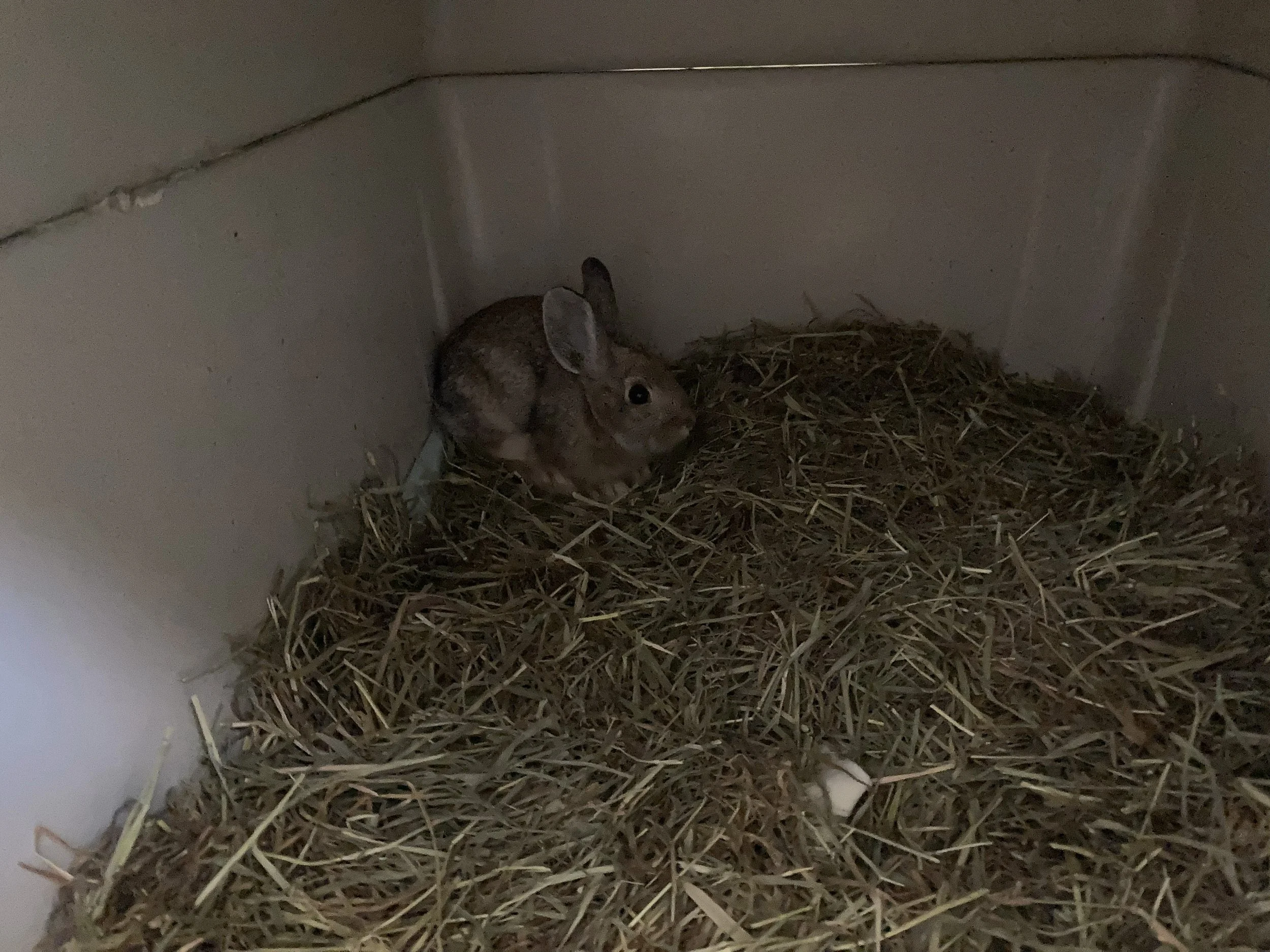
Desert cottontail 25-2400 in pre-release kennel getting cold-weather acclimated before release
Desert cottontail 25-2400 arrived after being picked up by SLCAS bopping around in downtown SLC. She was weak and we suspect that she had been hit by a car unable to find her way back into the foothills. She was reported to have been approaching humans, which is very unusual for a wild rabbit to do.
She had not orthopedic injuries (broken bones) but was very weak, so WCSL staff and volunteers provided supportive care and anti-inflammatory medications for her until she began to show signs of improvement and she fully recovered in a little over a month.
Desert cottontail 25-2400 being handled during routine cleaning at the center
This cottontail was admitted during the late fall months where it can be difficult to release animals due to inclement weather, hunting, and other barriers to release. We don’t like to see a warm November in Utah, but it worked out in her favor by decreasing her time in captivity, and after a short cold-weather acclimation in one of our insulated outdoor enclosures, she was released in a natural area with other known cottontails.
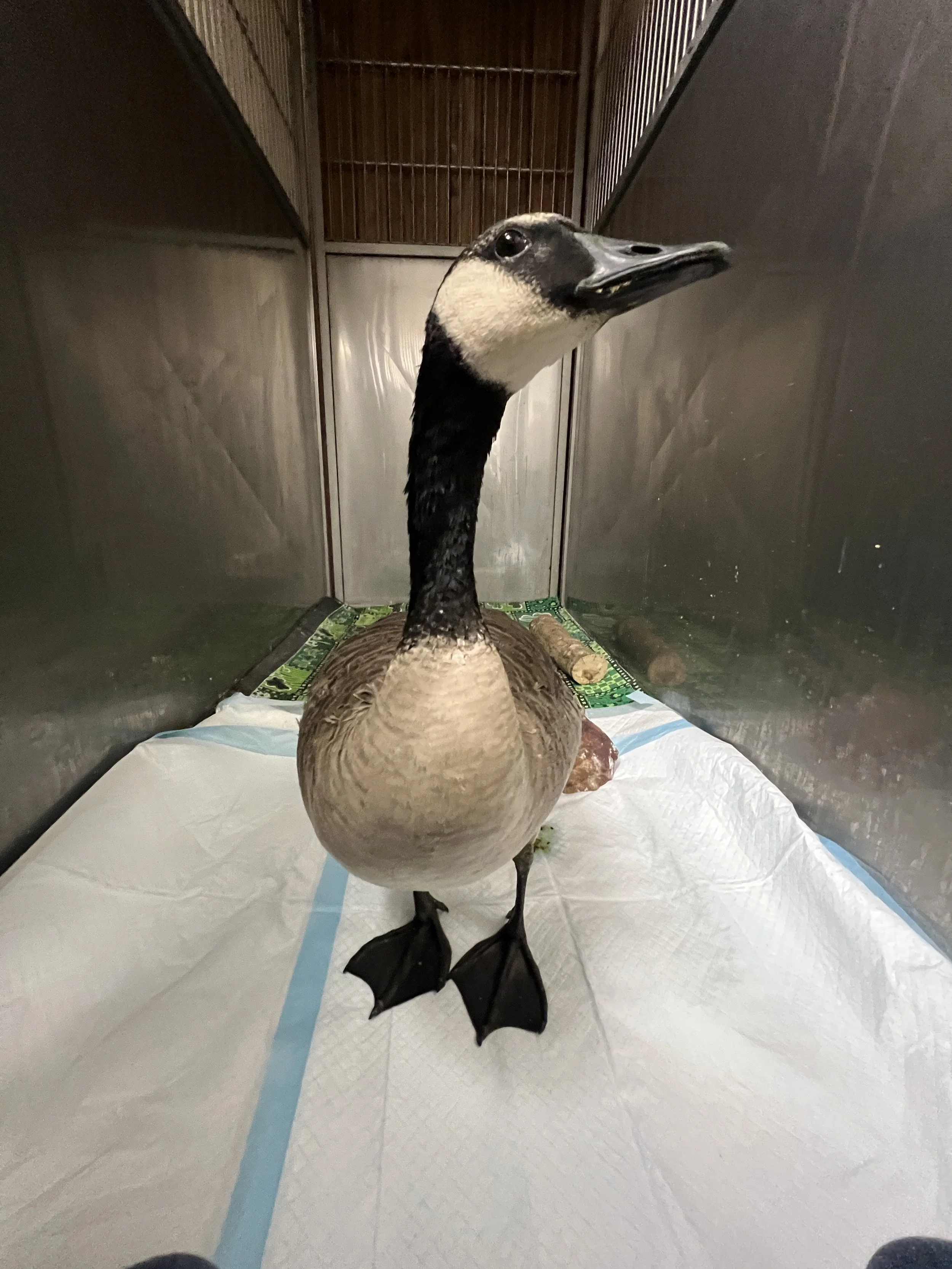
Canada goose set free after life-saving surgery
Canada goose 25-2229 arrived at WCSL on September 20 2025 and was in care 78 days before her release today (12/07/2025). She arrived with a distention on her lower right coelom that the finders/rescuers thought was a mass. It was reported that she was unable to fly with her family that continued to leave and return to her behind their home that was adjacent to some small water bodies. She arrived at the center in great condition, having eaten regularly and with no orthopedic injuries and staff could tell immediately that she had a hernia. Hernias are tears in parts of the body that let organs travel to areas that they should not travel to. Hernias are a common issue and with this case, her intestines were protruding out of the hold and into her subcutaneous space. While not directly harmful itself, this could eventually lead to intestinal necrosis where the intestines due due to lack of blood flow. It could also lead to obstruction, and either one of those would then lead to GI perforation and/or death. Luckily one of our veterinarians, Dr. Dawn Daugherty, was able to take her to surgery, repairing the tear in the body wall. This allowed her intestines to be tucked safely back where they belonged and after a recovery period, we released her today. This is one of the more incredible release videos as you can see her take flight, and then really get a nice high flight. It was reported that she was only able to fly about 10 feet in the air before arriving at the center. We are so thankful also to two of our most dedicated volunteers who spent half the day monitoring her movements and ensuring her release was successful.
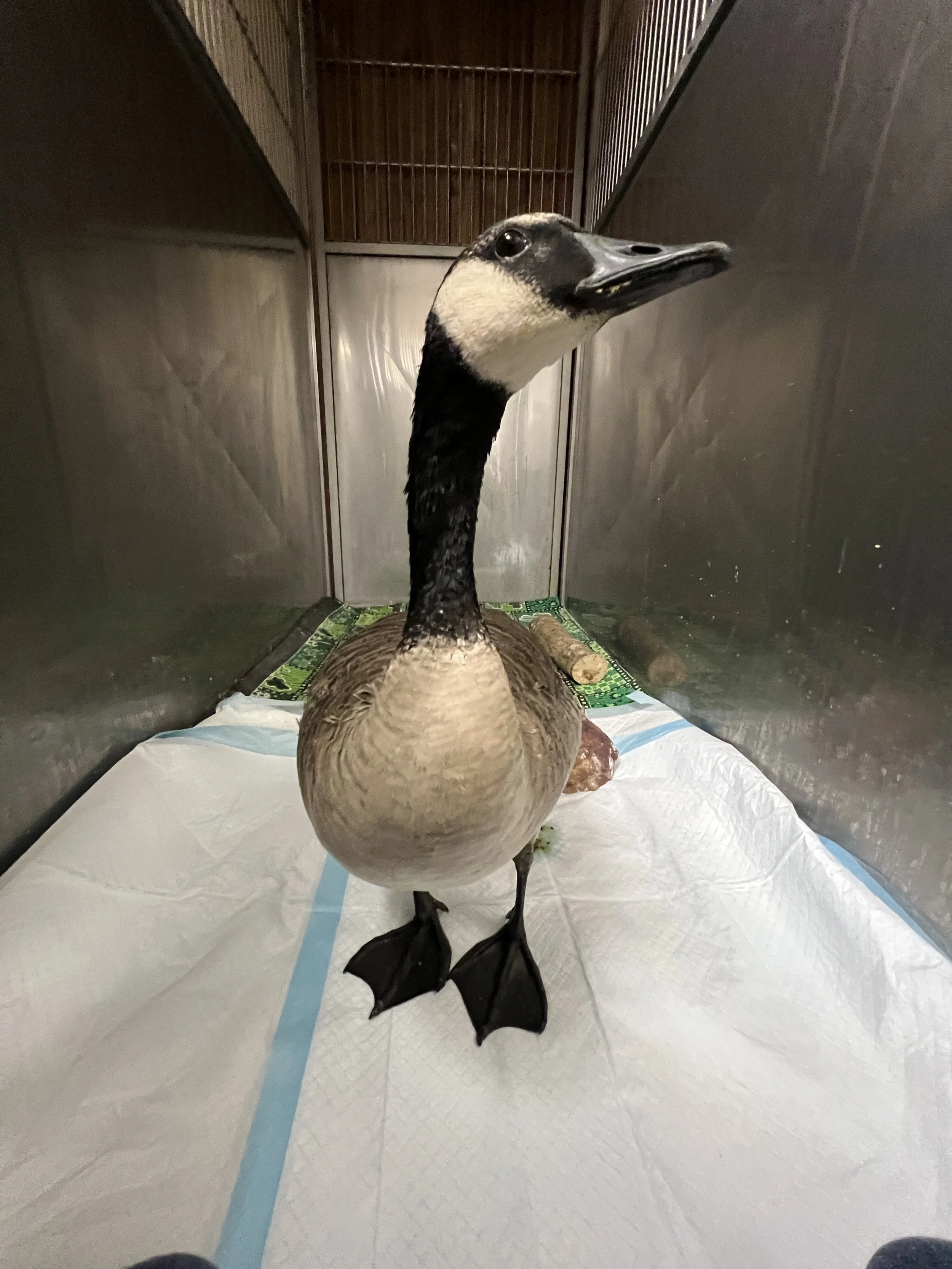
Canada goose 25-2229 in limited activity enclosure prior to surgery
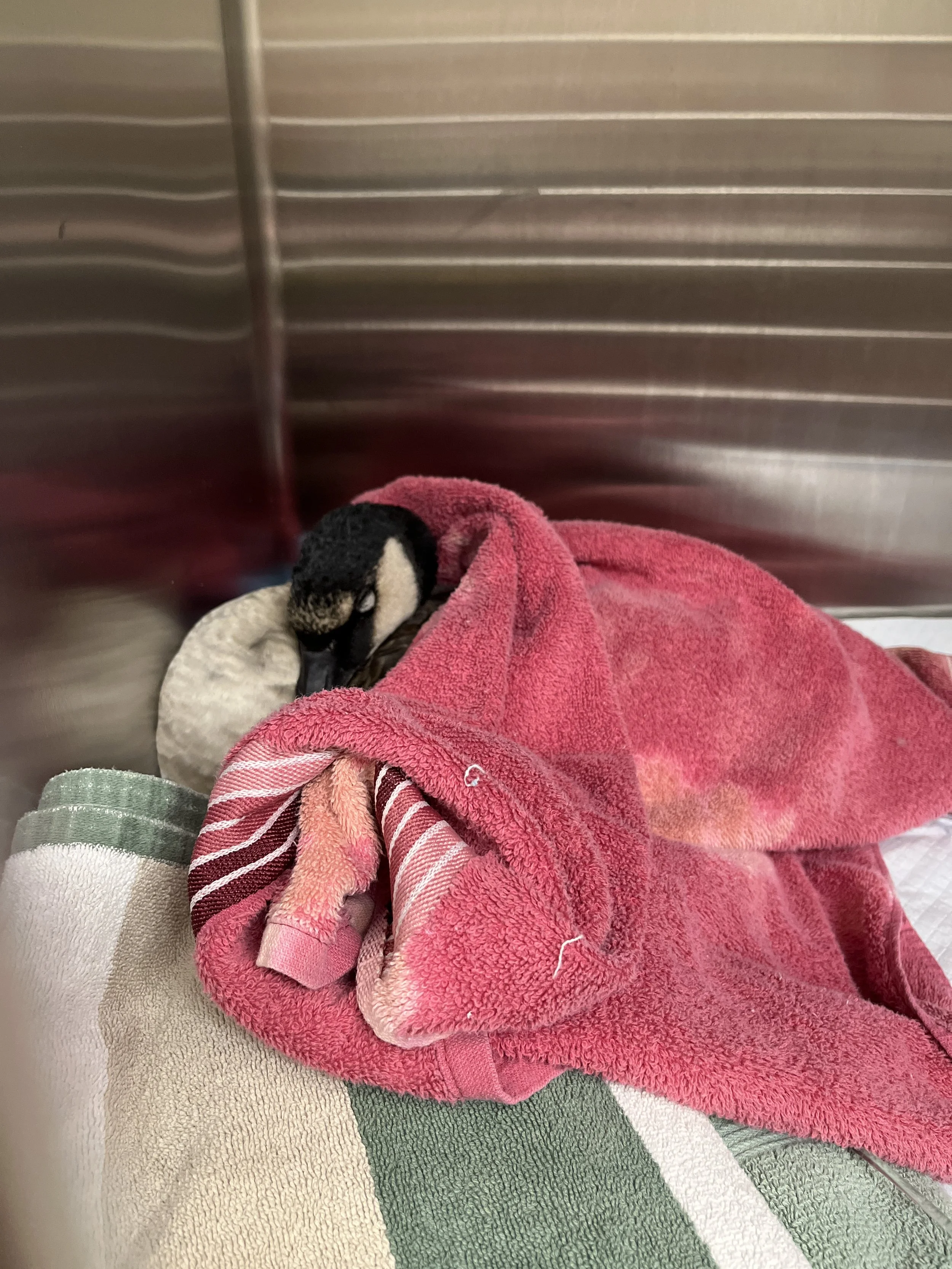
Canada goose 25-2229 recovering in towel after surgical hernia repair
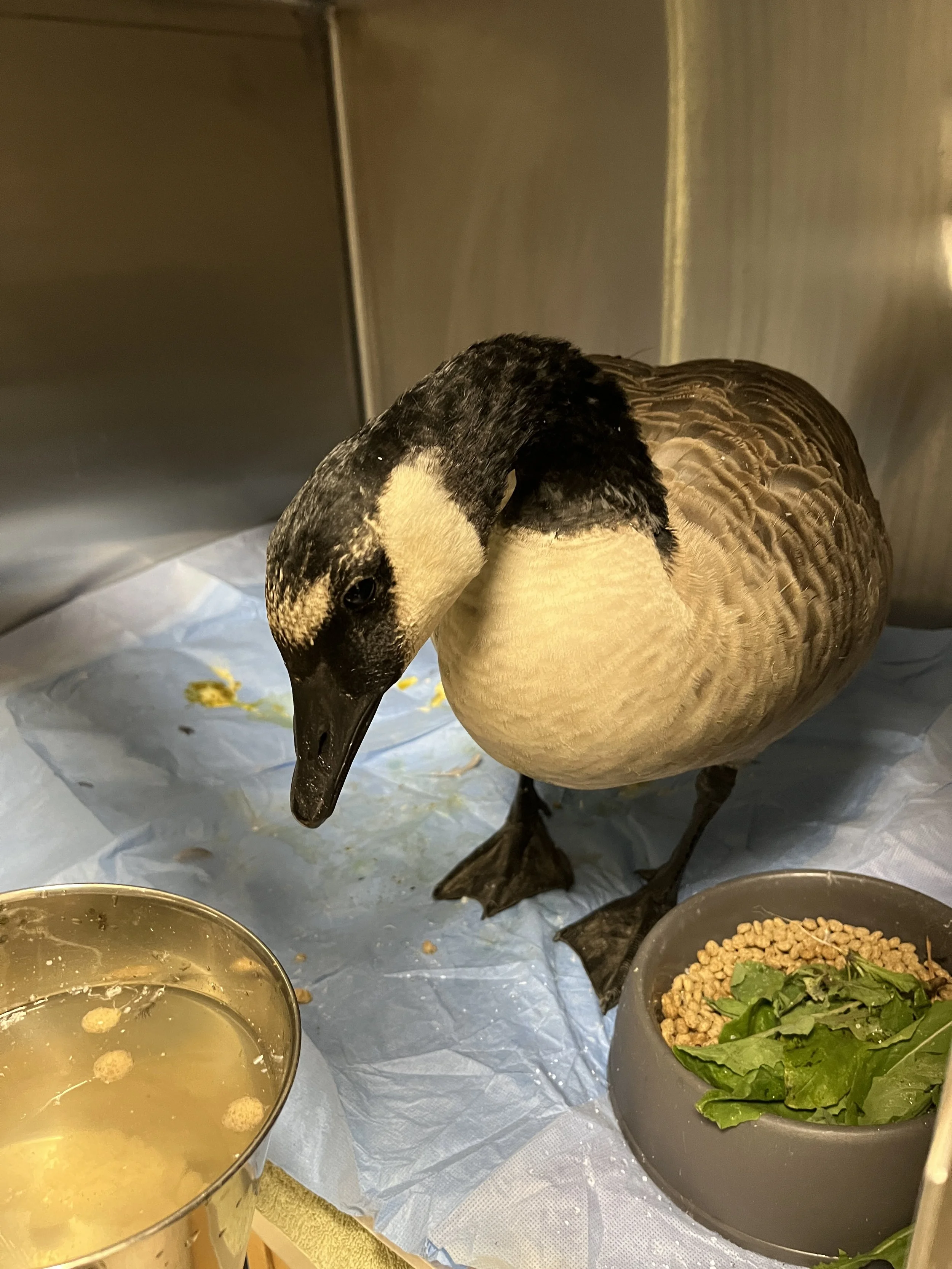
Canada goose 25-2229 on intake day
Baby predator re-unites with family

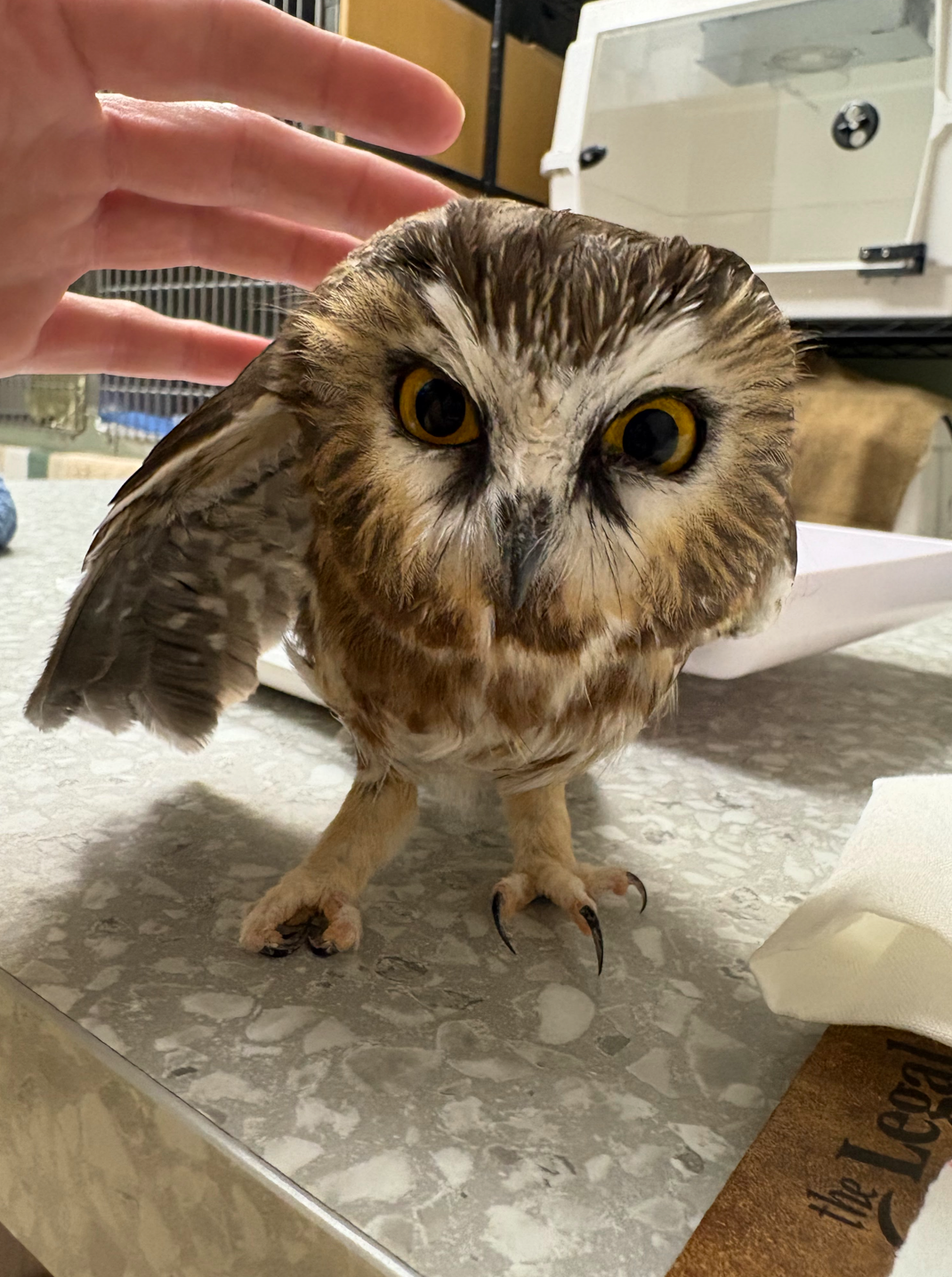
WCSL professionals were concerned about the wing droop on this baby so it was recommended that he be brought in for care
Western screech owl #25-154 was found alone on the ground in the cold after one of our recent Utah Summer-just-kidding-winter-again storms. He was cold but in otherwise good condition so the staff and volunteers of Wildlife Center of Salt Lake made sure he received a meal before reuniting him with his family. A HUGE shout-out to the finder, Corey, who scoped out his yard, watched for the family that night, found owl droppings and pointed us in the right direction. He followed up with us the next day that he had seen the family and we renested this little guy the same evening. We consider these cases wildly successful when we can return wildlife to their homes and families without too much intervention. It takes our staff and volunteers several weeks to get babies to the point in which their parents naturally can over a much shorter amount of time - of course - we are not owl parents! Our raptor nursery will be full soon and these babies are our most expensive patients! Please consider making a donation to our RodentPro account! You can find us on the RodentPro website by selecting "Utah," "Wildlife Rehabilitation Center," and "Wildlife Center of Salt Lake".”

After receiving an examination at the center, he was cleared to be returned to the nest

One quick trip to the store and a ladder later and this young owl is back up in the tree its family was spotted in

Just before dusk, our patient perched on the edge of the nest


Ferruginous hawk #25-77 was released earlier this year into an old orchard where there was prey-a-plenty. This big beauty was hit by a car in Erda and was brought to us by a UDWR officer. (Thank you @utahdwr for all the good work you do!) She arrived with blood in her oral cavity which she had inhaled into her lungs along with contusions from the strike. She was otherwise normal and after a few weeks in care she passed her flight tests and left our center on her way back to freedom.
Vehicle collisions are nightmares for birds, especially birds of prey. If you want to learn more about how you can help birds of prey, especially eagles, Hawk Watch International is conducting an ongoing Eagle Vehicle Strike program which can be found on their website. Ben Goldfarb released Crossings in 2023, a deeply moving investigative journalism piece that will drive you to think differently about travel and the impact of roads on our wild neighbors.
Every day the staff and volunteers at Wildlife Center of Salt Lake are inspired. We are moved by the people that show up for wildlife like the UDWR officer that brought her in, like the people who write books, like the directors and biologists that push for change. You too can be inspired, and through daily actions, voting, and support can help return these animals to the wild and keep them safe.
Helping grebes in need
Pied-billed grebe #25-58 was brought into Wildlife Center of Salt Lake after being hit by a car when flying low across the road! The finder jumped into action rescuing this bird from a busy road. If they had not saved this bird, he would have certainly been hit by another car and died.
When this grebe arrived at the center, a full physical examination was performed and the bird did not have any orthopedic (bone) injuries, so we kept her to monitor for contusions, internal bleeding, and lung damage. After she was cleared for release she was set free into a wetlands area populated by other grebes and in a much safer location.

